A Brief History of Royal Flying
The First Royal Flights
The Queen's Flight, disbanded in 1995, was descended from the personal flying unit established by His Royal Highness The Prince of Wales at Northolt in 1929, which subsequently became The King's Flight in 1936. However, Royal Flights and Royal Aircraft go back much further than The King's Flight, for the history of Royal Flying can be traced to the summer of 1917.
The Prince of Wales was the first member of the Royal family to fly when he was taken up in France during the First World War. On the 24th July 1917 he wrote to his father, King George V:
"It was so kind of you to give me leave to fly, which permission I took advantage of last Tuesday, 17th July and had ½ hour in the air above Abeele and Cassel with General Longcroft in an R.E.8 biplane, he is considered one of the best pilots in France." The R.E.8 biplane was a British two-seater reconnaissance and bomber aircraft of the First World War designed and produced at the Royal Aircraft Factory.
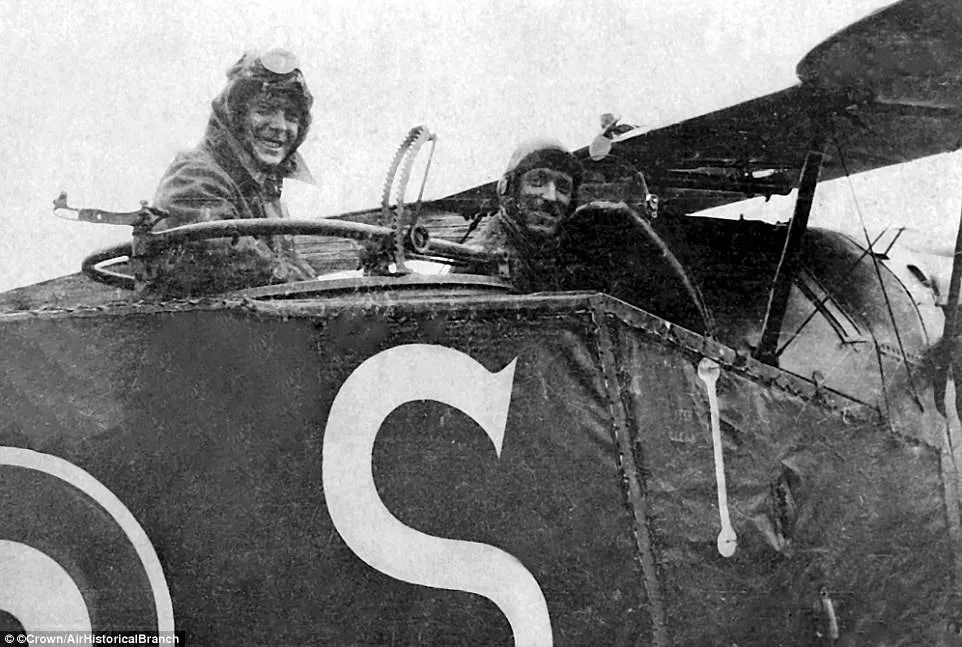
He next flew on 16th September 1918 with Captain WG Barker in a Bristol Fighter when he visited the Italian Front.
Prince Albert: The First Qualified Pilot
In the meantime, Prince Albert was taken up on 4th March 1918 for his first flight at the RN Air Station Sleaford, later to become RAF Cranwell, where Prince Albert was serving as a Naval Officer. In March 1919 Albert took a flying course at Croydon Airport using two Avro 504s from the Air Council Communications Squadron that were allocated for the course. He received his wings as a certified pilot on 31st July 1919 together with his permanent commission as a Squadron Leader. He was thus the first member of the Royal Family to become a fully qualified pilot and is the only British Sovereign to have achieved this distinction.
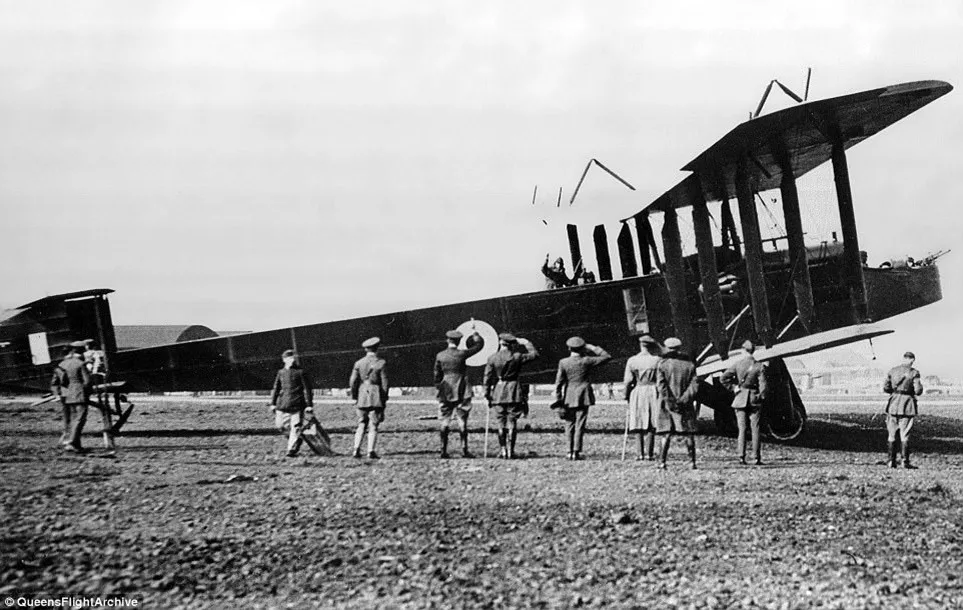
These activities were short lived however, for after the war The Prince of Wales again met with Barker, who was now a Major with the Victoria Cross, and flew with him in a Sopwith Dove. Barker unfortunately was still recovering from wounds received in the Western Front, and piloted the aircraft with one arm in a sling; when the King heard of the risks involved in this devil may care attitude, he advised his sons not to fly again.
It took some time for King George V's attitude to change and it was not until 1928 that the Prince of Wales took up flying seriously.
The Prince's Aircraft & Early Years
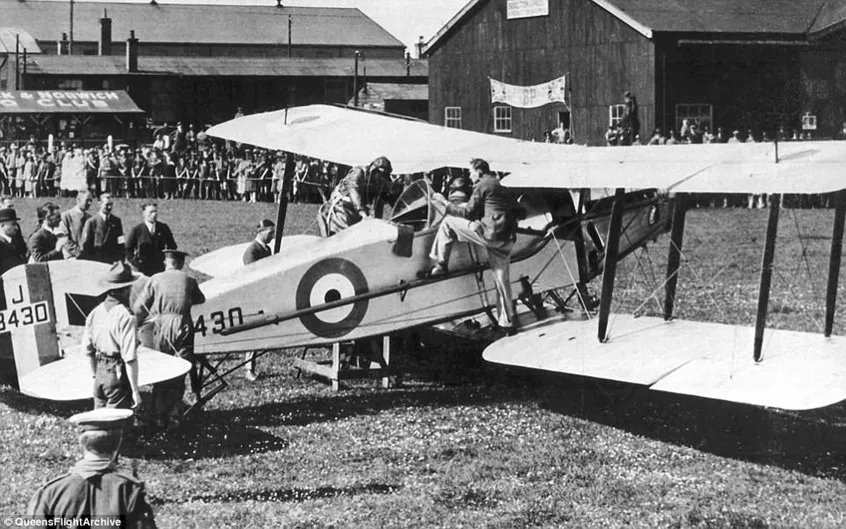
In 1929, the Prince of Wales appointed Flt Lt Edward Fielden to be his personal pilot.
The prince subsequently started acquiring a number of aircraft including a de Havilland Gipsy Moth, a Puss Moth & Fox Moth, a Vickers Viastra, which was little used, and a de Havilland Dragon Rapide, which proved to be very successful.
The King's Flight Established
When King George V died on 20th January 1936, the Prince of Wales became King Edward VIII. The following day Edward Fielden flew The King & The Duke of York from RAF Bircham Newton in Norfolk to Hendon in a Dragon Rapide, which was now the only aircraft operated by the King. Since King George V nor Queen Mary ever flew, this was the first occasion that a British Monarch had taken to the air.
On 8th July 1936 the King arrived by Dragon Rapide at RAF Mildenhall in Suffolk, accompanied by his brother the Duke of York, to review the aircraft of the three Squadrons operating from the base. They then made flying visits to Northolt, Duxford, Wittering & Mildenhall before finishing at Martlesham Heath to see the Spitfire & Hurricane prototypes.
As Marshal of the RAF, the King was entitled to a communications type aircraft for use on official occasions, so the Air Ministry agreed to meet the cost of any replacement for the Dragon Rapide, and this led to the formation of The King's Flight on 21st July 1936 at RAF Hendon. Sqn Ldr Fielden was appointed as an Equerry in Waiting with the appointment of Captain of The King's Flight. He was promoted to Wg Cdr, and two civilian engineers, Jenkins & Hussey, were given appropriate RAF NCO status.
On 11 December 1939, King Edward VIII abdicated in favour of his brother, The Duke of York. The new King, George VI, retained Fielden's services, but the King's Flight was now without an aircraft since the Dragon Rapide was the personal property of the former King, and it was thus sold in May 1937.
An Airspeed Envoy was allocated, the first publicly-funded Royal Aircraft, when it came into service from May 1937. This aircraft operated satisfactorily until July 1939.
World War II & The King's Flight
Shortly after this, at the outbreak of war, it was suggested that the King's Flight should move from Hendon to RAF Benson in Oxfordshire, as it would be less vulnerable and busy, and so the move went ahead in September 1939. Shortly afterwards the Airspeed Envoy was replaced with an armed Lockheed Hudson. A de Havilland Flamingo was also added to The King's Flight in September 1940, but this was little used as it lacked armament and was unfamiliar and thus a potential danger from Home Defence forces. Its lack of armament meant that it would also require a fighter escort when on operations.
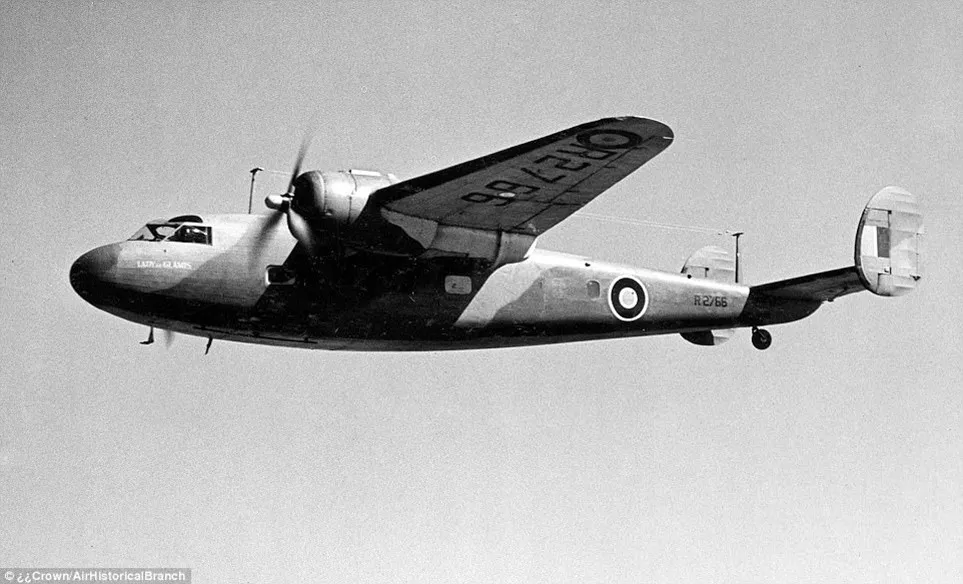
In 1942, The King's Flight was disbanded due to little use of its aircraft, and its responsibilities were transferred to No. 161 Squadron. 161 Squadron was an operational military squadron, involved in the dropping of supplies and agents over occupied Europe throughout the War, and were based at RAF Tempsford, near Sandy, Bedfordshire. The Squadron was under the command of Wg Cdr Edward Fielden who retained the title of Captain of The King's Flight, and was promoted to Gp Capt.
From 11th to 25th June 1943, King George VI carried out a tour of North Africa & Malta in an Avro York "Ascalon" which included meeting Field Marshall Montgomery and visiting the devastated Island of Malta for which he presented the George Cross to the Island for their outstanding bravery.
Post-War & The Royal Tour of Africa
After the war, in 1946, The King's Flight officially reformed on 1st May at RAF Benson and suitable aircraft and equipment were procured in preparation for the forthcoming Royal Visit to the Union of South Africa in 1947. Three Vickers Vikings were acquired (one for the King, one for the Queen and one for the ground crew). Two weeks later a fourth Vickers Viking aircraft was added as a freighter/workshop role.
By February 1947, the fleet of four Vikings flew from RAF Benson and established their bases for the Royal Tour at a base near Cape Town. The aircraft performed faultlessly during the long tour, carrying the King, the Queen and the two Princesses, Elizabeth and Margaret, to various parts of the Union and to Northern & Southern Rhodesia, flying 160,000 miles without incident. In February 1947, while in South Africa, the King's cypher was painted onto the Vikings and it is thought that this was the first time the cypher appeared on Royal aircraft, the basic design of which has never changed since then.
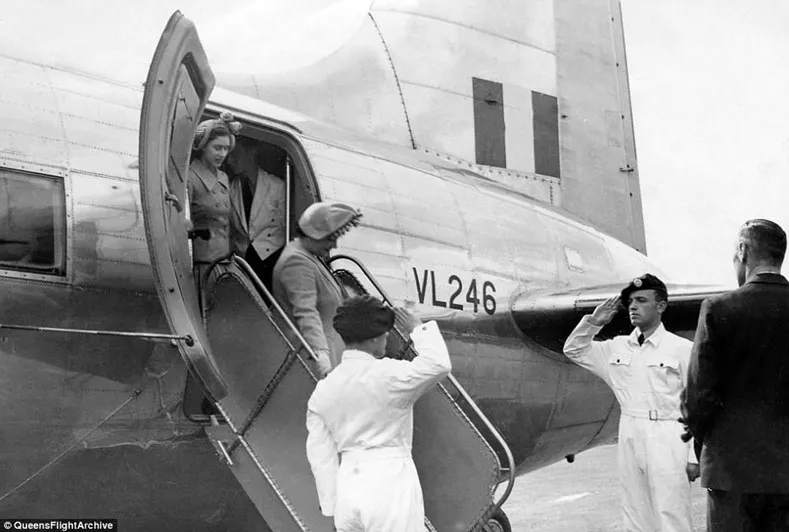
During the summer of 1947, the first helicopter operations were carried out, delivering mail to Balmoral from Aberdeen. The Sikorsky Hoverfly aircraft being loaned from the Royal Navy.
The Queen's Flight
In 1952, the Princess Elizabeth & Prince Philip were flown back to London on a BOAC Argonaut Atlanta from Entebbe, Uganda after the death of her father King George VI.
When Queen Elizabeth II acceded to the throne, the King's Flight was renamed The Queen's Flight (TQF).
It was at this time that Prince Philip decided to take a course of flying instruction by the RAF in May 1952, making his first solo flight on 20th December 1952.
Later in 1954 the first helicopter was allocated to The Queen's Flight, a Westland Dragonfly. Early users of the helicopter were, The Duke & Duchess of Gloucester, The Queen Mother & Princess Margaret, but it was Prince Philip who championed its use and soon took a flying course qualifying as a helicopter pilot in 1955.
Also, in 1955, Prince Philip acquired a personal 4-engined de Havilland Heron which was delivered by Sir Geoffrey de Havilland.
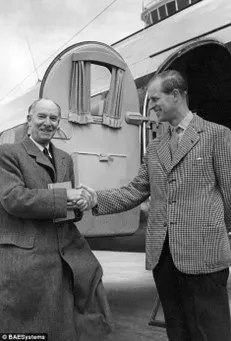
In October 1956, a Heron of TQF flew out to Kenya to transport Princess Margaret around during her official visit to Tanganyika. An extensive itinerary booklet was produced with fold-out map showing timings for each day's activities.
The Heron Era & Global Tours
In 1956–57 the Vikings were gradually being replaced by three de Havilland Herons, the last Viking leaving in mid-1958. The Herons soon started embarking on a major tour by the Duke & Duchess of Gloucester to Ethiopia, British Somaliland and Aden in November 1958.
The Queen embarked on a Royal Tour of India with Prince Philip during April & May 1959. In 1959 a tour of Kenya, Uganda, Nigeria and Ghana, was followed in 1960 by a visit to Rhodesia, Nyasaland & Nigeria, as well as coping with all the commitments within the United Kingdom and on the continent.
Two Westland Whirlwind helicopters were added to the TQF in 1960, along with a fluorescent red de Havilland Chipmunk. In June 1961 a fourth Heron arrived to share some of the volume of work of TQF's commitments. Further tours to Africa for Independence celebrations saw the highest number of hours flown in a year by the Flight at 2,678.5 hours.
On 6th July 1961, during a proving flight for The Queen's visit to Mali, the aircraft and crew were arrested at Gao. Taxiing for a correctly authorised refuelling stop, the aircraft was surrounded by armed Mali police and subsequently locked in a hangar. After much haggling without either side understanding the others language, the aircraft was permitted to leave the following morning. This is believed to be the first occasion a Royal aircraft & crew had been arrested.
On 1st January 1962, Air Cdr Edward Fielden retired from TQF and was promoted to Air-Vice Marshall with the appointment of Senior Air Equerry to the Queen.
The Andover Years
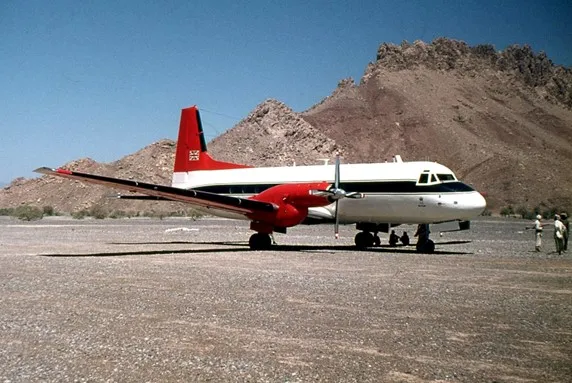
In 1964 the Herons began to be replaced with the Hawker Siddeley 748 Andover. Two aircraft arrived initially and when the Herons eventually departed, a third Andover was acquired.
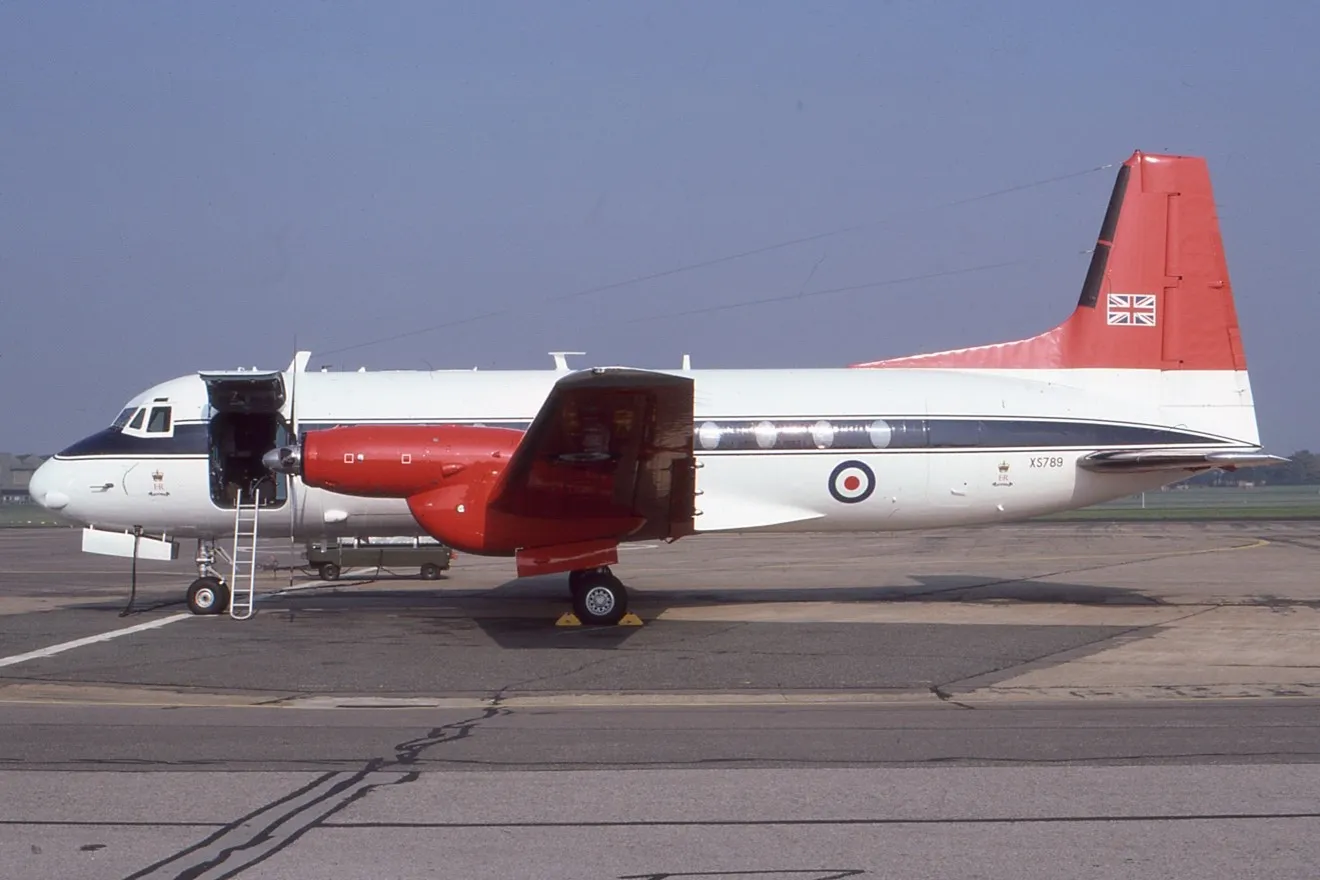
Tours now became world-wide, with visits to the Far East, Saudi Arabia, Nepal, India. The Caribbean, the British Guiana independence, Canada & the USA all being visited.
Tragedy & Transition
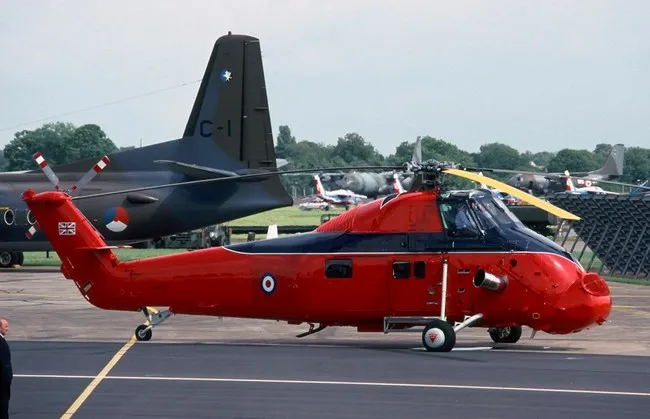
In 1967 it was decided to replace the ageing Westland Whirlwinds with the twin-engined Wessex. At the end of the year, 7th December 1967, during a routine flight to Westlands Helicopters at Yeovil, Somerset, from RAF Benson, the single-engined Westland Whirlwind XR487 crashed at Brightwalton, Berkshire when the main rotor shaft snapped. The deaths of the crew & passengers were taken very badly by all members of the Flight. Air Cdr John Blount (Captain of TQF), Sqn Ldr Mike Hermon (Senior Engineering Officer), Sqn Ldr John Liversedge (pilot), who was due to retire at the end of the year and Flt Lt Ron Fisher (co-pilot/navigator) all perished in the accident. After this accident, all Whirlwind helicopters throughout the services were grounded pending a full report by the Board of Enquiry into the accident. No more helicopter flights by TQF took place until April 1968. Also, the Queen was never again allowed to fly in a single-engined aircraft.
Following this tragic accident, Air Commodore Archie Winskill was appointed the new Captain of The Queen's Flight.
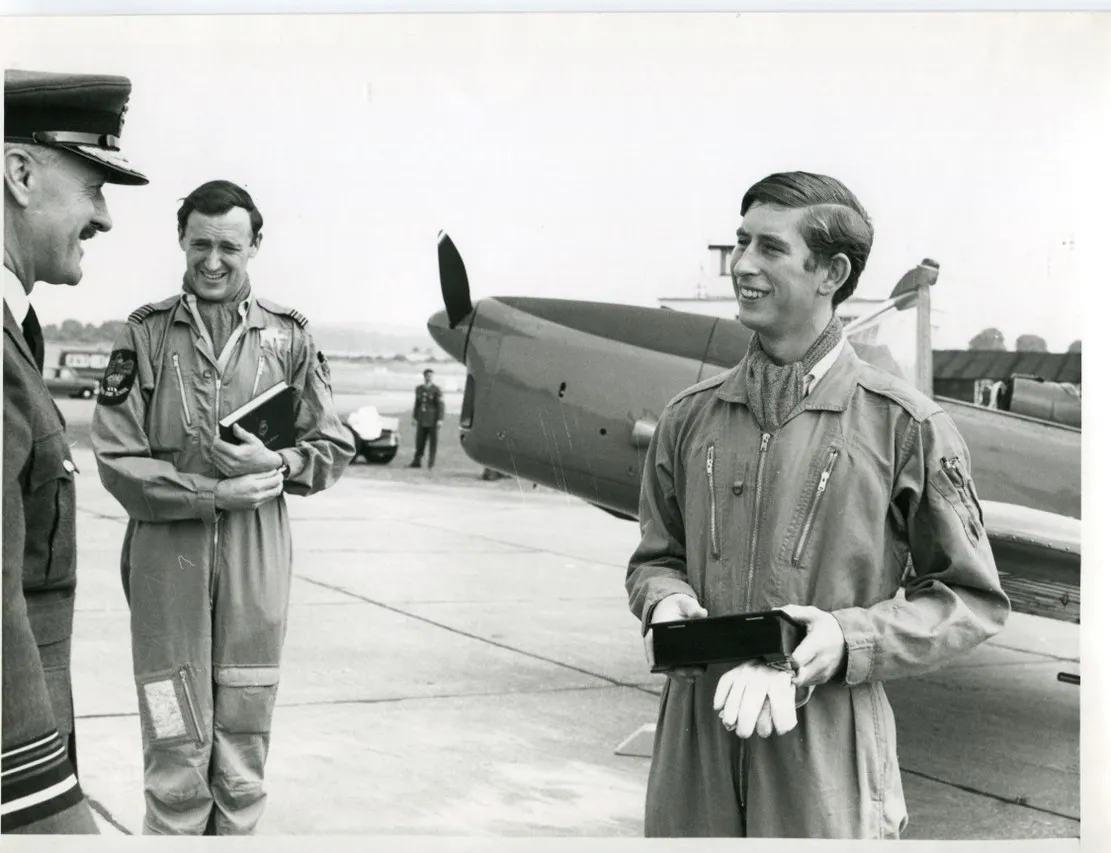
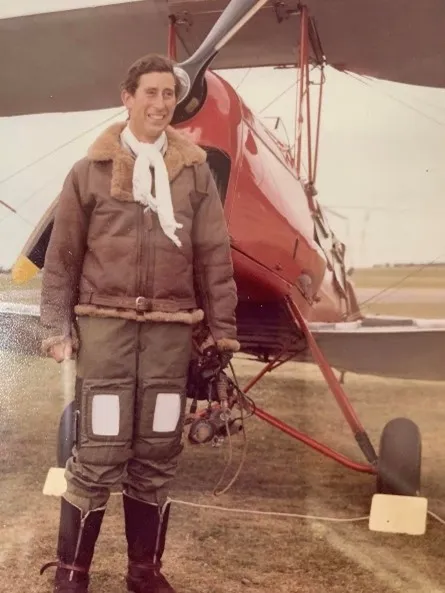
In Jul 1968, Prince Charles had his first air experience flight during his university studies. His first solo flight took place from RAF Bassingbourn, Cambridgeshire, on 14 January 1969.
The new Wessex helicopters started to arrive in mid-1969 with the remaining Whirlwind retiring to 15MU at RAF Wroughton, Wiltshire on 23 July 1969.
In May 1972, news of the death of the Duke of Windsor was received. As a founder of The Prince of Wales's Flight and later as King Edward VIII, the founder of The King's Flight, it was appropriate that on 31st May 1972 his body was flown home from France to RAF Benson, the home of TQF, and was Laid in State in the Station Church.
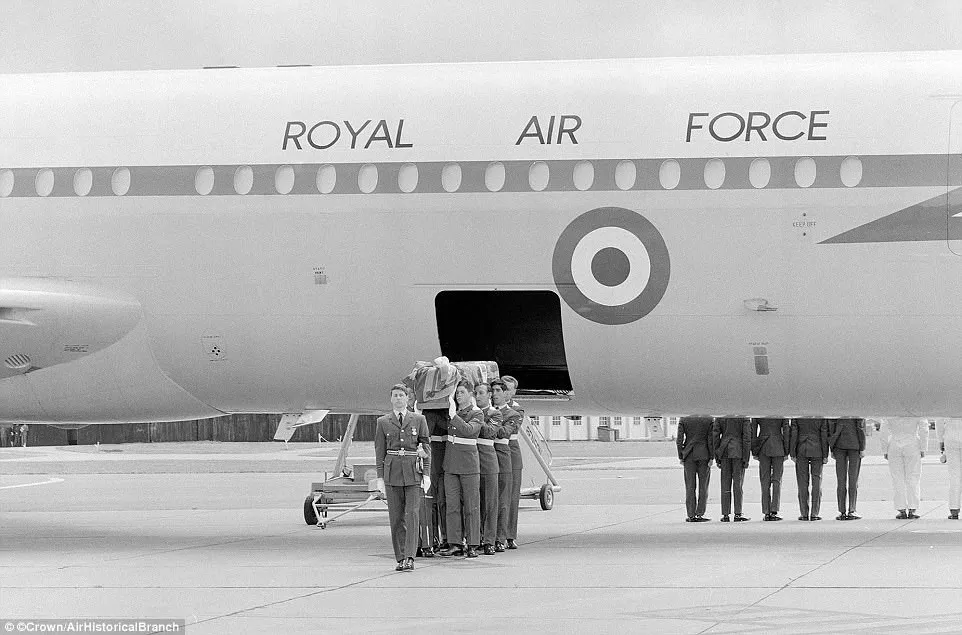
During 1974–76 a number of Royal overseas tours took place, to such places as, Papua New Guinea, Solomon Islands, Malaysia, Indonesia, Canada & USA.
In the Silver Jubilee year of 1976, the BAC 1-11 aircraft was being considered as a replacement for the ageing Andover.
On 2 November 1977, Queen Elizabeth II travelled for the first time aboard a British Airways Concorde (aircraft G-BOAE). Her Majesty then flew from the Sir Grantley Adams International Airport, Barbados, to London Heathrow, England. That occasion was also the first visit by a Concorde aircraft to Barbados. The 'Alpha Echo' aircraft in which The Queen had travelled, was the last Concorde to fly supersonic to Barbados on 17 November 2003; it was a delivery flight to the Barbados Concorde Experience Museum where it remains on display.
In 1978, The Captain of The Queen's Flight, Air Cdr Archie Winskill, celebrated his 10th anniversary in post, and 2 years later was awarded a knighthood. He eventually retired in 1982.
The tragic death of Lord Mountbatten at the end of August 1979, resulted in one of the Andovers being fitted out in a casualty evacuation role, the first time this had been done with a Royal aircraft.
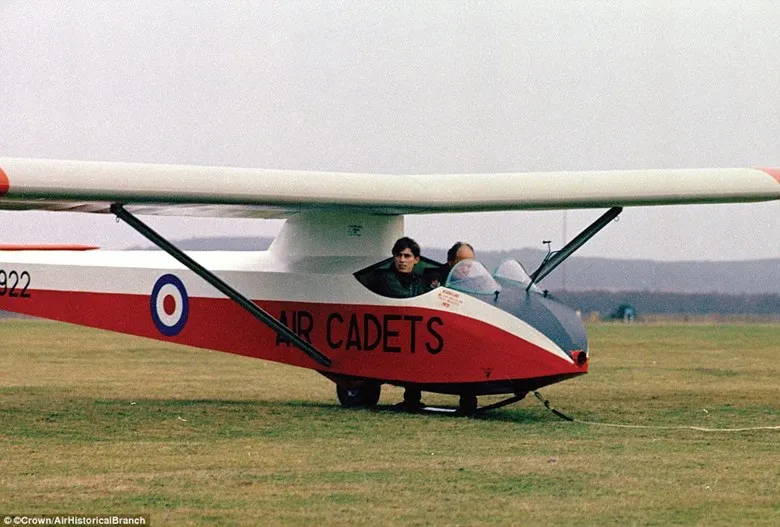
Prince Andrew, seen in the accompanying picture, was taking glider lessons as early as 1975, and began his flying career in powered aircraft in 1979 in the Chipmunk at RAF Benson.
In 1980, the Prince of Wales made an informal visit to The Queen's Flight, where he received a memento to commemorate his achievement of 1000 flying hours.
The BAe 146 Era
On the 7th May 1982, the Queen's Flight Association was officially formed with an inaugural dinner at which Sir Archie Winskill was elected as President.
Also, in June 1982, the Prince of Wales was the first member of the Royal Family to make a helicopter flight from British to foreign soil, when he flew to the oil terminal at Port Antifer near Le Havre, France.
At the end of December 1982, it was announced that two Bae 146 aircraft would be purchased by the RAF for a proving period and that The Queen's Flight would re-equip with the extended version in 1984.
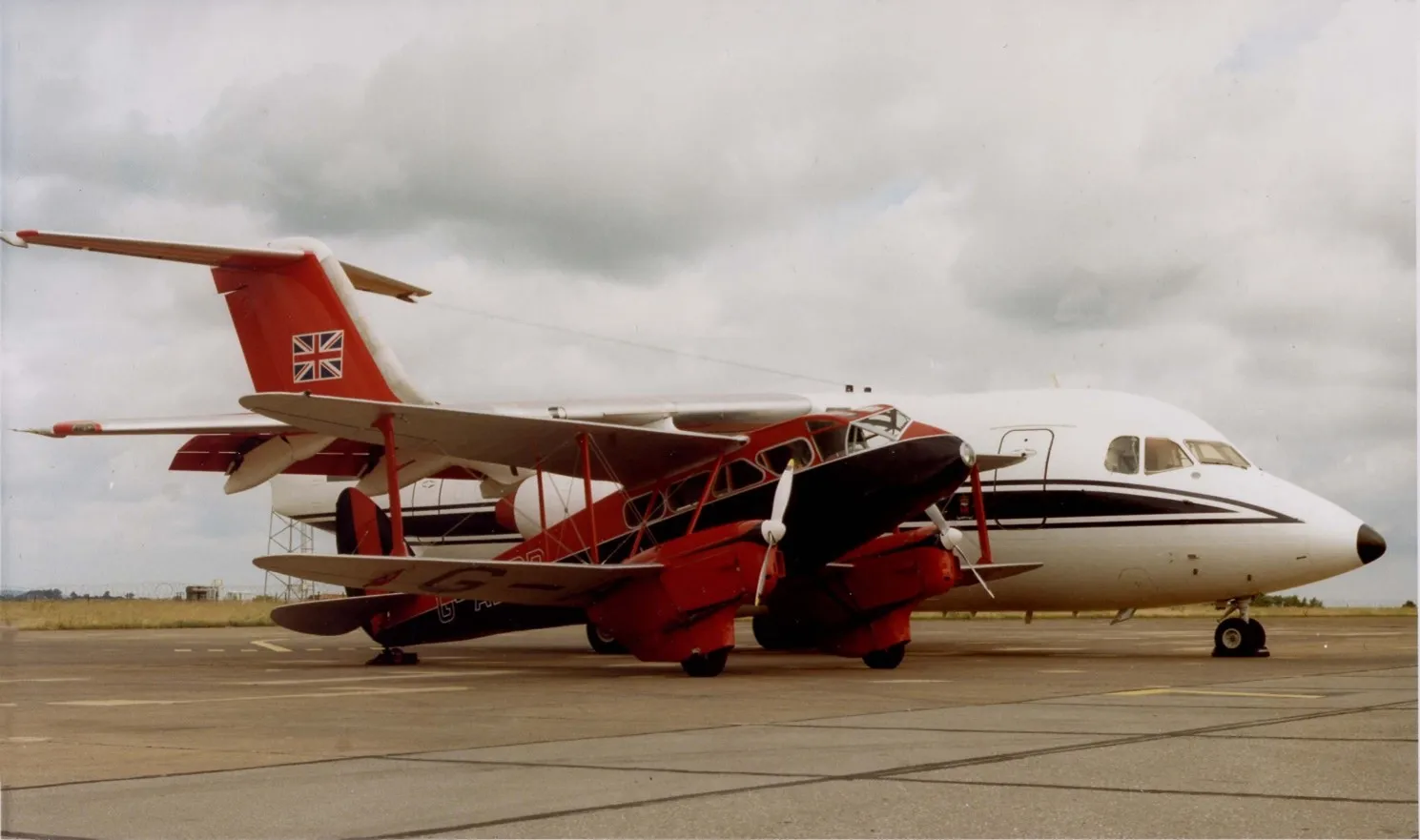
The Prince of Wales accepted the position Patron of The Queen's Flight Association in June 1983.
A Royal Visit to RAF Coltishall, Norfolk, in 1983 was made by HM The Queen & Prince Philip when she inspected personnel and aircraft of the three squadrons operating from the base.
HM The Queen visited The Queen's Flight in 1984 accompanied by the Duke of Edinburgh and was greeted by Prince Edward who had flown there from RAF Abingdon, Oxfordshire, having just completed a course to achieve his Preliminary Flying Badge.
In 1985, Princess Anne toured India in connection with "Save the Children Fund" of which she is the patron, and also another 10 tours were carried out to West Africa, Canada, Egypt, Algeria, Tunisia, The Caribbean, Madagascar, Tanzania, Mozambique, Zambia & Sudan.
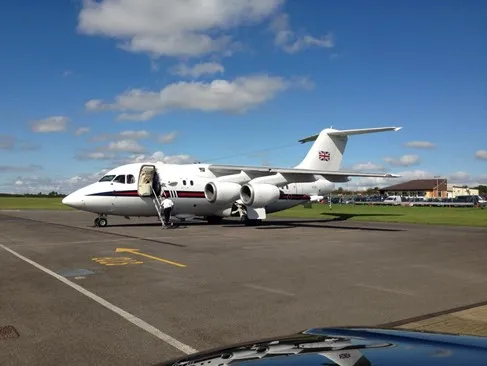
In 1986 two BAe 146's arrived at RAF Benson and were handed over to the Captain of The Queen's Flight by the Chairman of British Aerospace. The first official overseas tour by the BAe 146 was to the Azores, when it took the Duke & Duchess of York on honeymoon.
The first Royal Tour of China took place in 1986 when the Queen & Prince Philip went on a State Visit. Difficulties were experienced as there were no route maps published in English, so two China Airlines crew were allocated to fly with the aircraft, one a radio operator who spoke good English, the other a navigator who didn't speak any. During the tour an engine change had to be carried out in Hong Kong after it was reported that excessive wear had taken place on one of the engine's turbine blades, the Officer Commanding having to use his own credit card to guarantee payment. The new engine and technicians duly arrived in Hong Kong and worked throughout the night to replace it. HRH Prince Philip was rebooked onto a commercial flight back to the UK.
More overseas tours followed throughout the 1980s with Princess Anne being the most frequent passenger with flights both in fixed wing and rotary winged aircraft.
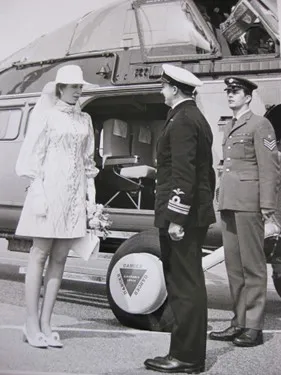
In 1989, Prince Philip paid a visit to the Andaman & Nicobar Islands in the Bay of Bengal off the coast of Thailand, the first time a Royal Visit had been made to the islands.
A third BAe 146 was added to the fleet in January 1991, with the last Andover departing to the Royal Aircraft Establishment at Bedford.
The Queen's first helicopter flight in England was on 17th January 1991 when she flew from RAF Marham, Norfolk, to Buckingham Palace.
A record-breaking tour in 1992 was carried out by Prince Philip when he travelled over 45,000 miles over a period of 38 days, visiting New Zealand, Japan, Alaska, Canada, USA, Guyana, Brazil, Barbados and the Bahamas in the BAe 146. The aircraft crossed the equator four times and the International Date Line once.
The 1990s & Merger
During all this time it must not be forgotten that the ground crews worked around the clock 24 hours, 7 days a week, to maintain serviceable aircraft for the ever-increasing workload. Very rarely did a Royal Flight get cancelled because of unavailability of an aircraft.
In 1994, the Secretary of State for Defence announced in the House of Commons that it had been decided to move The Queen's Flight from RAF Benson to RAF Northolt, to join other Communications aircraft of No 32 Squadron, with rationalisation into a single co-located unit which would be known as No 32 (The Royal) Squadron.
And so, on 31st March 1995, at the end of a visit to The Queen's Flight at RAF Benson by HRH The Princess Margaret, HRH was flown from RAF Benson to Windsor Royal Lodge in a Wessex helicopter. The aircraft carried out a flypast so that HRH could wave farewell to the Flight members assembled outside the hangar. This was the last flight carried out by The Queen's Flight.
On 1st April 1995, The Queen's Flight was merged into No 32 Squadron RAF Northolt to become No 32 (The Royal) Squadron. Its BAe 146s and two Westland Wessex helicopters moved from RAF Benson to 32 Squadron's base at RAF Northolt. This ended the RAFs provision of dedicated VIP transport aircraft, as the aircraft of 32 Squadron are only available to VIP passengers if not needed for military operations.
Later in 1997, the Royal Yacht Britannia was retired and not replaced, and the Royal Household was given authorisation to acquire a helicopter for its private use.
The Queen's Helicopter Flight
And so, The Queen's Helicopter Flight (TQHF) was formed. (Later renamed The King's Helicopter Flight).
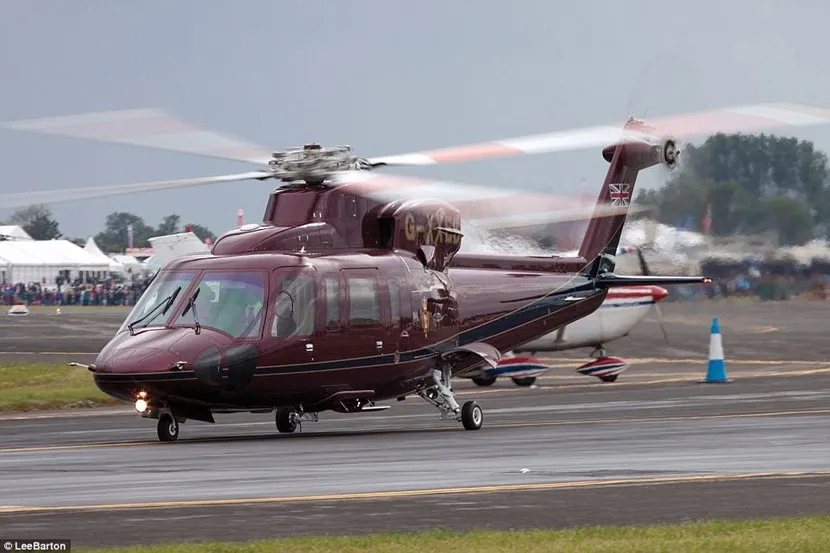
The Queen's Helicopter Flight, based at RAF Odiham in Hampshire, is part of The Queen's Private Secretary's department of the Royal Household, and is tasked by the Royal Travel Office at Buckingham Palace. From 1998 to 2009, it used a single maroon Sikorsky S-76C+ twin-engined helicopter, which was registered G-XXEA in honour of G-AEXX, the Airspeed Envoy that the Queen's uncle, the Prince of Wales first flew in The King's Flight. The helicopter, the first airframe dedicated solely to Royal use, entered service on 21 December 1998 and was a commercial type widely used around the world, although the Queen's helicopter was only fitted with six seats for more comfort.
On 4 November 2009, Sikorsky announced the delivery of a new S-76C++ helicopter to TQHF. This helicopter, registration G-XXEB, is capable of a maximum speed of 178mph and a ferry range of 400 miles (640km) with a 30-minute fuel reserve.
Incidents & Accidents
Finally, not everything went well for The King's and The Queen's Flight.
In addition to the fatal accident to the Whirlwind in December 1967, the following incidents occurred.
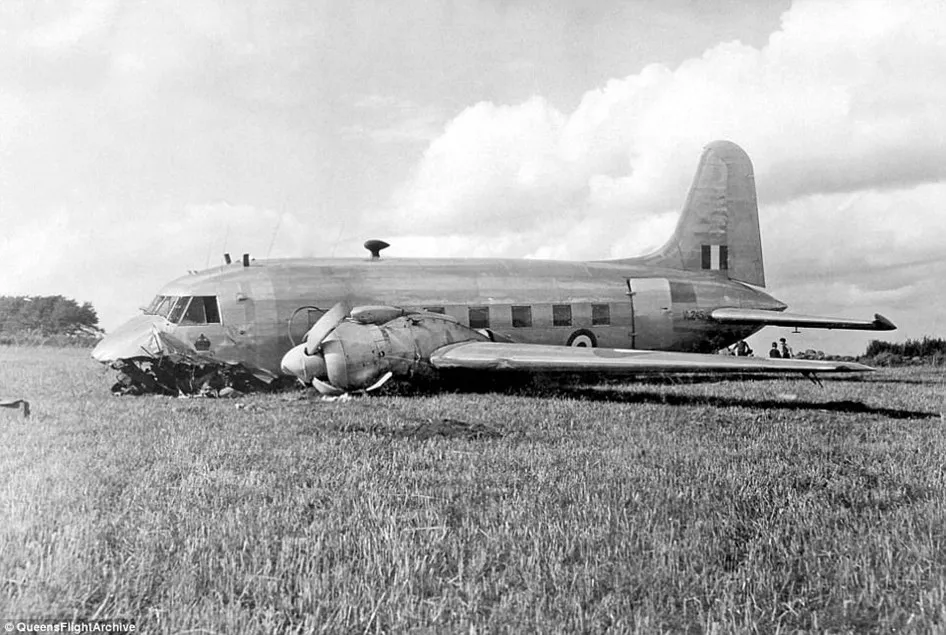
On 12 September 1947, a Vickers Viking (VL245) of the King's Flight, lost an engine while climbing out from Dyce airport near Aberdeen. Unable to gain height, the crew made a forced landing in a field at Newhills, 2km away from the airport. The aircraft was damaged beyond repair, and fortunately there were no casualties.
Prince William of Gloucester was an accomplished pilot and owned several small aircraft. On 28 August 1972, he was competing in the Goodyear International Air Trophy at Halfpenny Green, near Wolverhampton, with Vyrell Mitchell listed as a passenger. Shortly after their take-off and at a very low altitude, the Piper Cherokee he was piloting banked abruptly with the wing hitting a tree and shearing off, and the out-of-control plane flipped over and crashed into an earth bank, bursting into flames. Both occupants were killed immediately. Six Andover flights were made to carry eleven members of the Royal Family to his funeral. He had been due to visit the Middle East in September with The Queen's Flight.
On 29th June 1994, Prince Charles was landing a BAe146, registration ZE700 of The Queen's Flight, at Glenegedale Airport on the Isle of Islay. The aircraft suffered a heavy landing and slewed off the runway causing substantial damage to the undercarriage. There were no injuries to any of the 11 personnel on board. Following this incident, HRH Prince Charles has never since piloted an aircraft of the Royal Squadron.
This ends my brief history of Royal Flying.
Written & presented by Chris Harrison – September 2018